
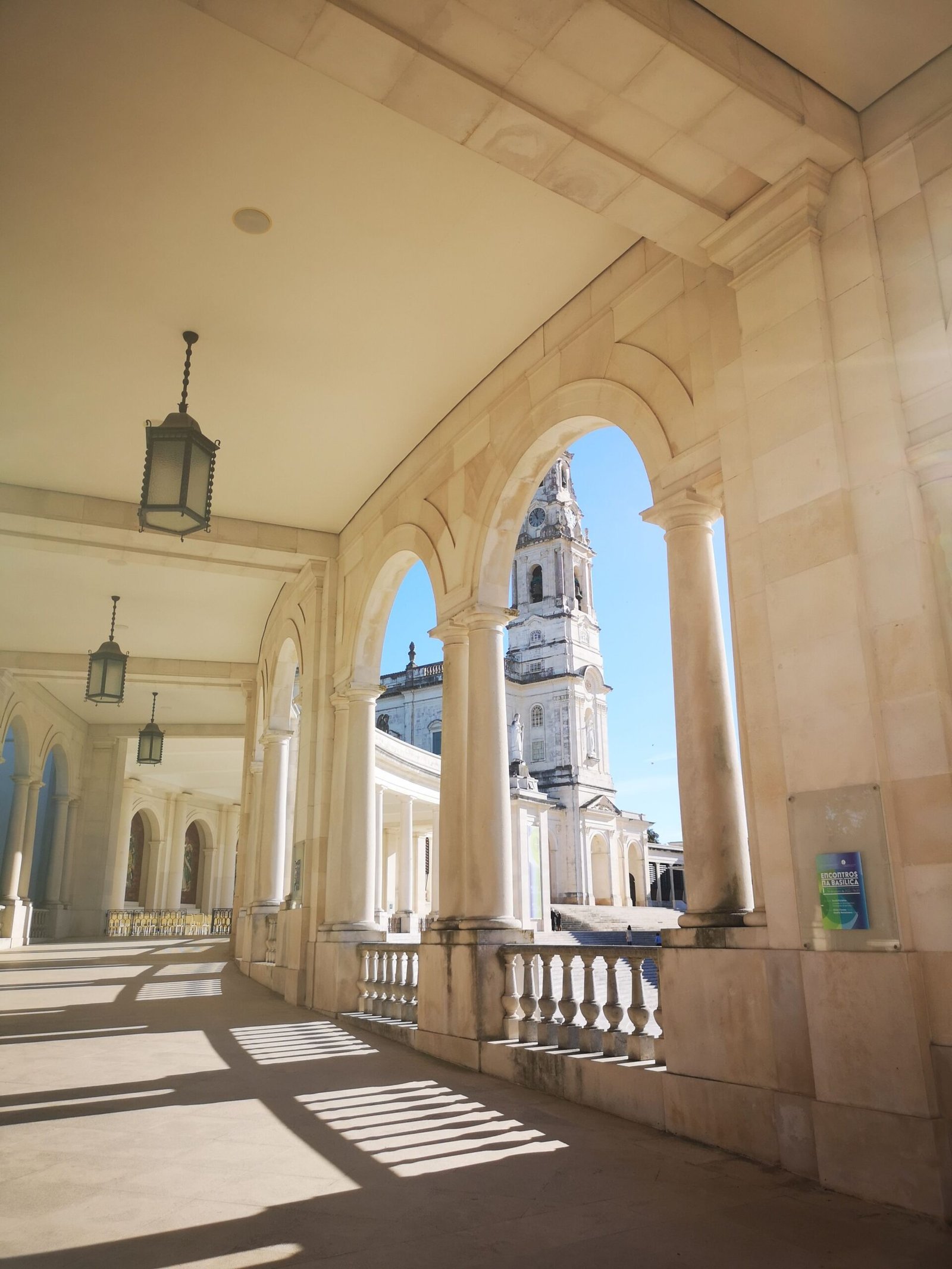
A pilgrimage destination · 1h30 from Lisbon
The Sanctuary of Fátima
A small town in central Portugal, and one of the most visited Marian shrines in the world. Pilgrims come for the Sanctuary of Our Lady of Fátima, the Chapel of the Apparitions and the shepherds’ village of Aljustrel. Privora drives visitors here on private pilgrimage tours and direct airport transfers.
Planning a pilgrimage to Fátima, Portugal
- 1 hr 30 from Lisbon
- Masses daily, year-round
- 13 May & 13 October pilgrimages
Inside the sanctuary
Sacred sites at Fátima
Fátima is not one building but a whole precinct — two basilicas, a small chapel at its heart, an open plaza the size of a city square, and the shepherds’ village a short walk beyond.
Everything below sits within a two-kilometre radius. On a private tour you can see it all in a single day, in whatever order suits your group — and stop as long as you want at whichever site matters most.
-
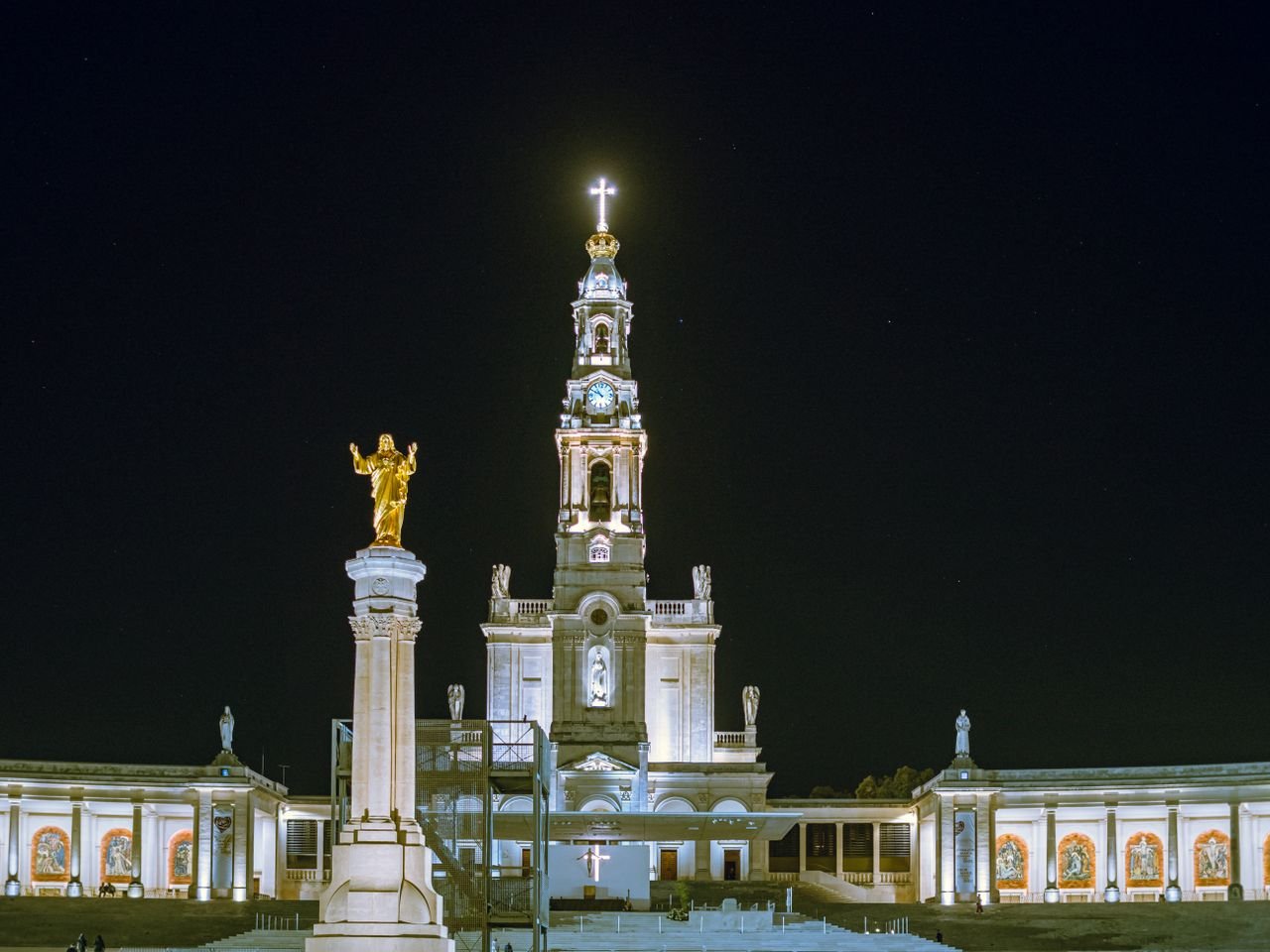
01 Chapel of the Apparitions
Built in 1919 on the exact spot where the three shepherd children reported seeing Our Lady, and preserved almost unchanged since. The daily rosary and the evening candle processions start from here.
What to see The 1919 chapel itself, the statue above the altar, the evening candle procession along the esplanade.
-
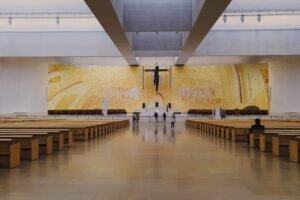
02 Basilica of Our Lady of the Rosary
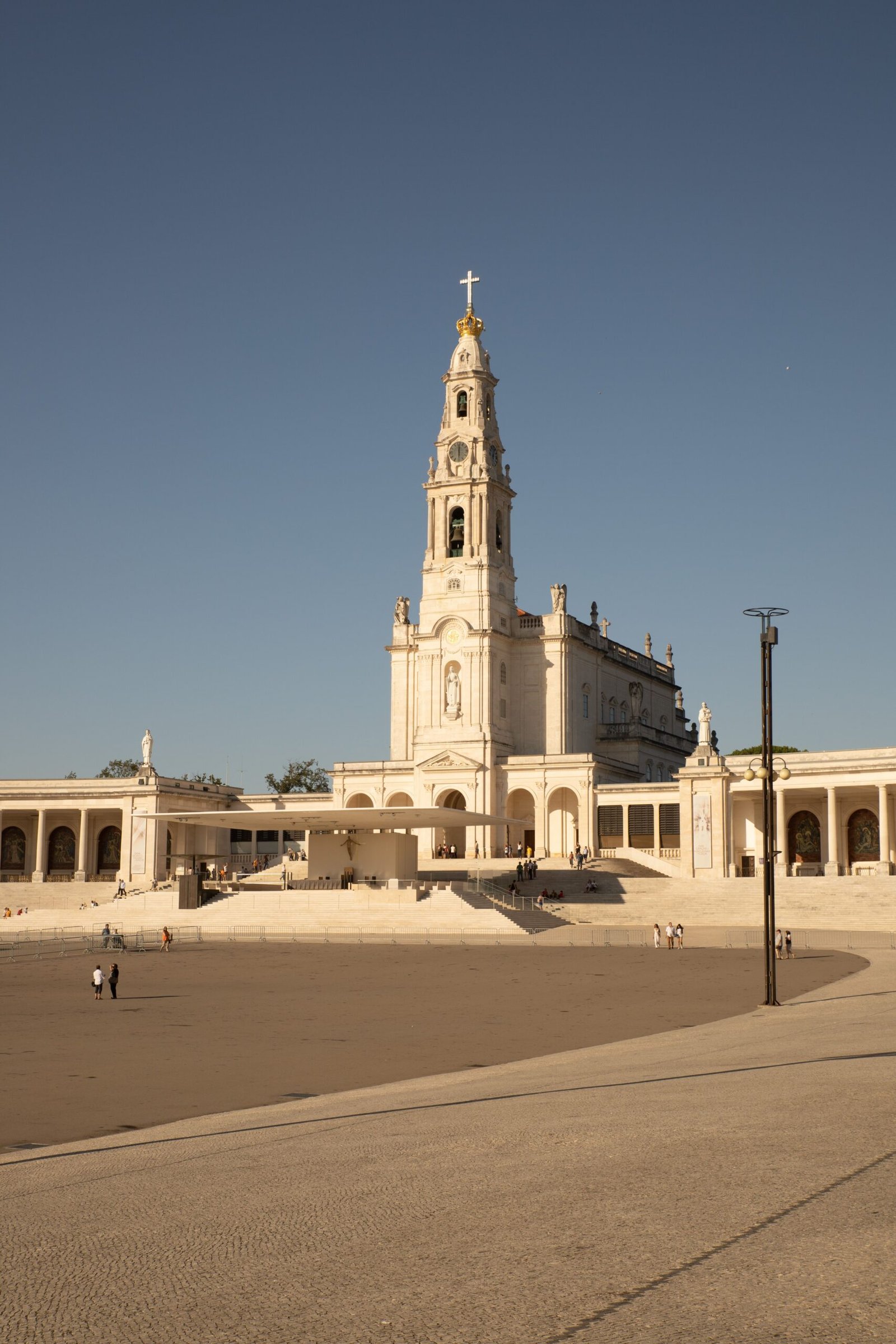
The white neo-baroque basilica that most visitors picture when they think of Fátima. Completed in 1953, with a sixty-five-metre central tower and a golden altarpiece. The tombs of Francisco and Jacinta Marto — canonised in 2017 — sit at the front of the nave, alongside that of Sister Lúcia.
What to see The tombs of the three shepherds, the golden altarpiece, the colonnades flanking the esplanade.
-
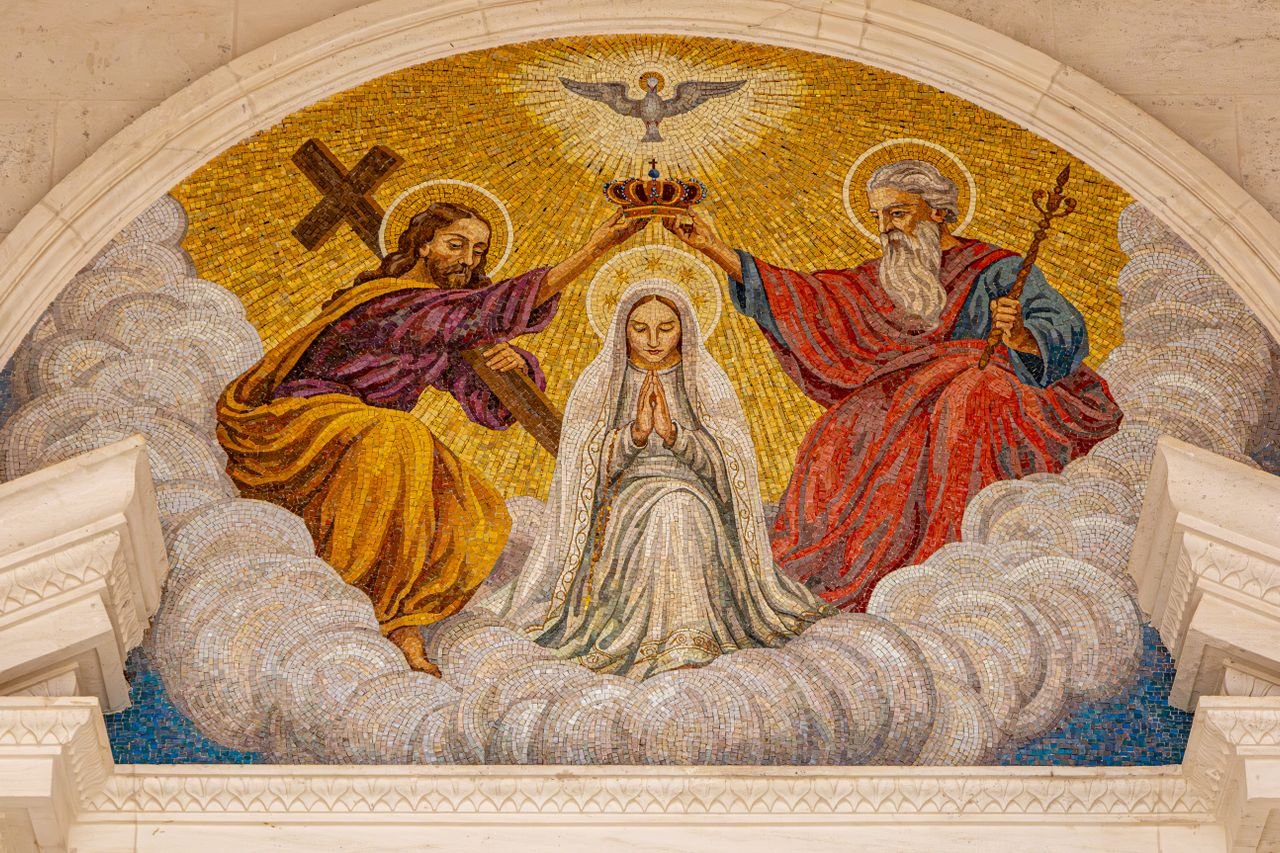
03 Basilica of the Holy Trinity
Portugal’s largest church by capacity, opened in 2007. A circular, deliberately modern building designed by Alexandros Tombazis — deliberately the opposite of the older basilica in style. It seats around 8,600, and its fourteen side chapels line the circumference.
What to see The Rupnik mosaic on the east wall, the fourteen side chapels, the light shifting around the circle through the day.
-
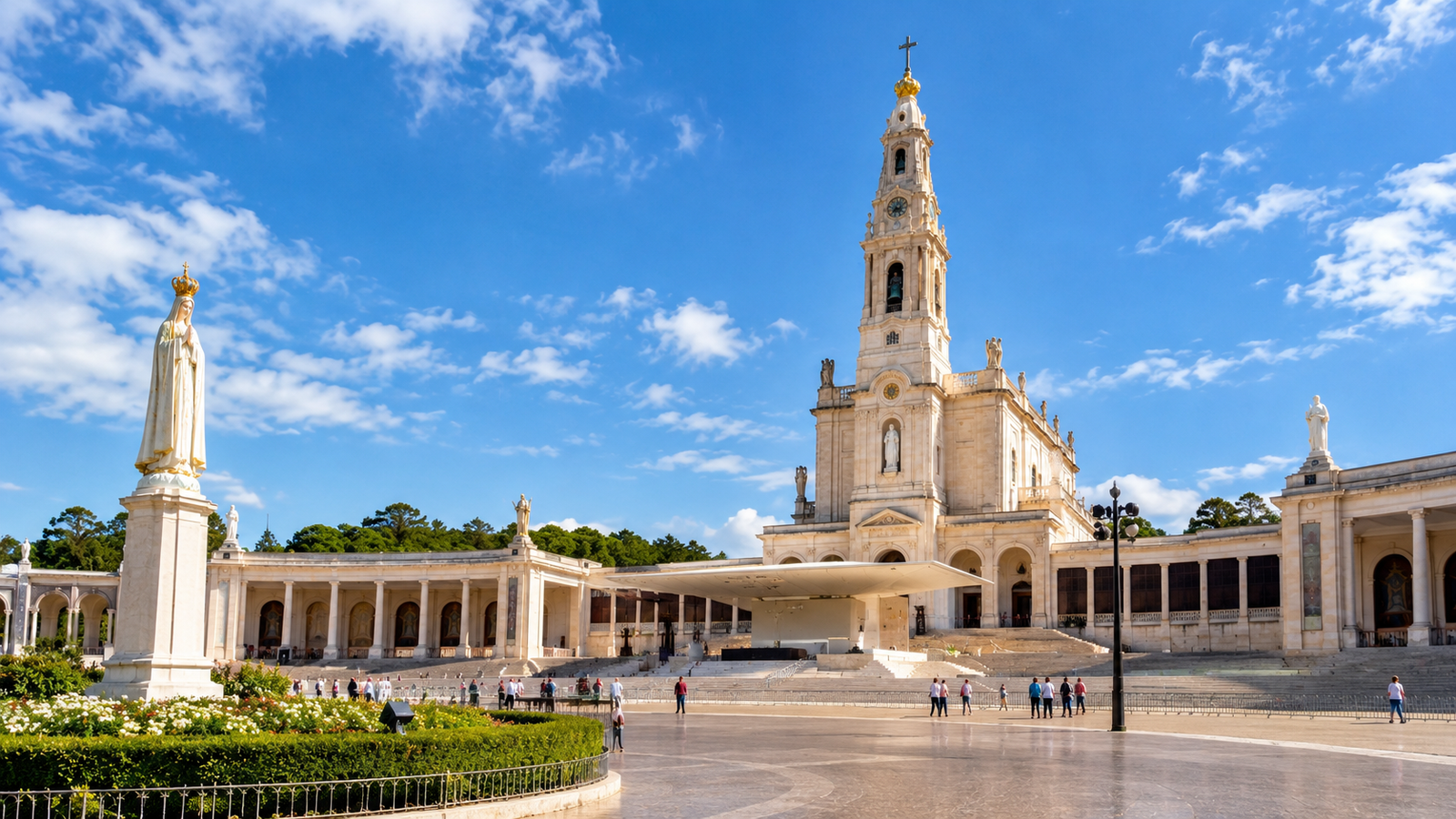
04 The Esplanade
A vast open plaza roughly the size of St Peter’s Square, holding up to three hundred thousand pilgrims for the great feast days. Quiet and sun-bleached most of the year; filled with candlelight on the nights of 12–13 May and 12–13 October for the vigil and procession.
What to see The central column with the statue of Our Lady, the candle altar, the scale of the space when it fills for the vigils.
-
05 Aljustrel and the Valinhos
About two kilometres from the sanctuary, reached by the Via Sacra or by a short drive, Aljustrel is the village where the three shepherd children lived. Their houses are preserved as small museums, and the Valinhos paths beyond lead to the sites of the later apparitions.
What to see The three shepherds’ houses, the well at the Cabeço, the Valinhos paths and the Stations of the Cross along the hillside.
The story of 1917
Six apparitions, May to October
Three shepherd children — Lúcia dos Santos, aged 10, and her cousins Francisco and Jacinta Marto, aged 9 and 7 — reported seeing a Lady in white above a small holm oak at Cova da Iria. She asked them to return on the 13th of each month for six months. What follows is what they said they saw, and what happened around them.
-
13 May 1917
The first apparition
After morning Mass the three children took their sheep to the Cova da Iria, a bowl of land owned by Lúcia’s father. While they were playing they saw a flash of light, and then a Lady dressed in white, standing above a small holm oak. She asked them to return on the thirteenth of each month for six months, and to pray the rosary every day. The children told no one until the following week.
-
13 June 1917
The Immaculate Heart
Word had spread, and a small crowd of around sixty people came to Cova da Iria. The children reported that the Lady showed them her Immaculate Heart and asked that devotion to it be spread. She told Lúcia that Francisco and Jacinta would be taken to heaven soon, but that she would remain on earth longer to make the Immaculate Heart known.
Among the crowd was Lúcia’s mother, who had been sceptical of her daughter’s account until that morning.
-
13 July 1917
The vision and the secret
Several thousand pilgrims had gathered by this point, and the local authorities were beginning to take notice. The children reported that the Lady showed them a vision of hell, and entrusted them with a three-part secret — the second and third parts of which would not be made public for decades. She told them that a miracle would be performed in October, so that all might believe.
-
19 August 1917
The apparition at Valinhos
The children were not at Cova da Iria on 13 August. They had been detained by the local administrator, Artur de Oliveira Santos, and held for two days in the municipal jail in an attempt to make them retract their account. Six days later, on 19 August, the Lady appeared to them at Valinhos instead — a small valley on the way to their homes, where they had gone to tend the sheep after Sunday Mass.
The thousands of pilgrims who had waited at Cova da Iria on the thirteenth saw nothing that day.
-
13 September 1917
The crowd gathers
An estimated twenty thousand people made the journey to Cova da Iria. The children reported that the Lady told them to continue praying the rosary, and repeated her promise that in October a great miracle would confirm the apparitions. By this point the local paper O Século had begun sending reporters.
-
13 October 1917
The miracle of the sun
Rain had been falling all morning, and an estimated seventy thousand people stood in the mud at Cova da Iria. The children reported that the Lady told them she was the Lady of the Rosary, and asked that a chapel be built on the site. As she rose and left, the crowd reported seeing the sun spin and dance in the sky, and then plunge toward the earth before returning to its place. The ground, soaked by rain, was afterwards reported to be dry.
The event was witnessed by believers and sceptics alike, including journalists and photographers, and was reported in the national press over the following days.
The holm oak is gone, but the chapel built on its site in 1919 still stands, and the thirteen days of May and October are still the two dates when the sanctuary fills.
Before you book
Planning your visit
The four things most visitors want to know before they choose a date, set out plainly. Everything else — pickup time, route, stops, how long at each site — is decided with you when you book.
-
When to go
May & October for pilgrimages
The 12–13 May and 12–13 October vigils bring hundreds of thousands of pilgrims. For a quieter visit, a weekday outside those two months is the best of both.
-
How long
Half a day, or a full one
Two to three hours covers both basilicas, the Chapel of the Apparitions and the esplanade. Add Aljustrel and the Valinhos and you have a comfortable full day.
-
Getting there
1 hr 30 from Lisbon by car
About 120 km on the A1, door to door. Privora drives it as a private tour or a direct airport transfer — no train changes, no coach timetable.
-
Dress code
Shoulders and knees covered
Required inside both basilicas and the Chapel of the Apparitions. A light layer in the bag is enough for most of the year; the esplanade itself has no dress code.
See Fátima with Privora
Private tours & direct transfers from Lisbon
English-speaking driver, fixed price quoted before you book, and the whole car to yourselves. Free cancellation up to 24 hours before.